
ROUTINE EXAMS
Limited/Problem focused- Of Course we would love to take care of you comprehensively and keep your smile healthy and beautiful. We understand you may have time or other constraints. If you are having a specific problem or question you would like addressed, we can take care of you.
Comprehensive Exam- This exam will look at your entire mouth, head and neck. We will start with head and neck cancer screening we like to call it a “massage,” Combining radiographs and an intra-oral exam we can plan to address any issues you may have or discuss any necessary preventative treatment to avoid problems and you smiling.
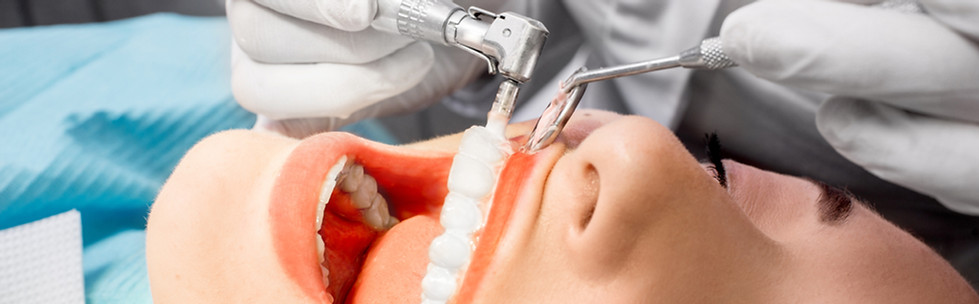
CLEANINGS
Prophylaxis cleaning otherwise known as a routine cleaning, is performed on healthy patients who just need routine maintenance to ensure oral health and prevent problems. A routine cleaning removes all the plaque from teeth, deeper hardened plaque (calculus or tartar), and surface stains. Prophylaxis is a great dental cleaning procedure to maintain already-healthy teeth along with daily oral hygiene practices. Most patients should have this type of cleaning every 6 months.
Scaling and root planing, which is also referred to as a deep cleaning is a type of cleaning is usually administered to patients who have developed gum disease or have a high risk of developing it. This deeper cleaning is most often performed on patients who have signs of gum disease, such as bleeding gums, swollen gums or loose teeth. Hard deposits of calculus or plaque are removed and the tooth smoothed to help prevent the progression of gum disease.
A gross debridement is a dental cleaning procedure that is sometimes administered in order to determine if there are any teeth issues that could not be noticed without removing build up. This type of cleaning is usually performed on patients that have not been been to a dentist in several years and have developed a large amount of plaque or calculus.

Dental Restorations
Dental restorations replace broken or missing tooth structure to restore function and esthetics. There are several types of restorations each have indications for specific cases. Below are the most common, let us know if you have any questions.
Fillings are the most common dental restoration. Cavities or decay are usually fixed with fillings there are several types of material used including gold, silver amalgam, and tooth colored composite resin. Bonding has revolutionized dentistry allowing us to fix teeth with tooth colored fillings that are strong and look great too.
Crowns are a tooth-shaped “cap” that placed over a tooth when too much tooth structure is missing that a traditional filling cannot be done, or a tooth has a crack and needs a cap to reinforce it to prevent further breakdown. Crowns restore the shape and size of a tooth so that patients look great and can function too.
In-lays/Onlays We are all about saving teeth and removing as little as possible tooth structure to build the tooth back up in a way that it will look good and function long term. Sometimes if part of the tooth is healthy we don’t have to cover the entire tooth with a crown or “cap.” With an inlay or onlay we can replace just the decayed or broken down portion of the tooth.

Tooth Replacement
Tooth loss can affect your oral health and confidence, but modern dentistry offers excellent solutions to restore your smile. Our clinic provides comprehensive tooth replacement options tailored to your specific needs. Dental implants are a popular, durable choice, acting as artificial tooth roots that are surgically placed into the jawbone to support a crown or bridge, offering a long-lasting and natural-feeling solution. Alternatively, a dental bridge may be recommended, which uses adjacent teeth as anchors to support a prosthetic tooth (or teeth), effectively "bridging" the gap left by missing teeth. For those seeking a removable solution, we also offer custom-fitted partial and complete dentures, designed to restore function and appearance effectively. During your consultation, we will assess your oral health and discuss which treatment path—implants, a bridge, dentures, or another therapy—is best for you to achieve a complete, healthy smile.

Emergency Dentistry
Emergency dentistry focuses on providing immediate care for patients experiencing sudden or severe dental problems that require urgent attention. Common emergencies include severe toothaches, broken or chipped teeth, knocked-out teeth, abscesses, or injuries to the mouth and gums. When a dental emergency occurs, prompt treatment is essential to relieve pain, prevent infection, and save the affected tooth whenever possible. During an emergency visit, the dentist will assess the cause of the problem, manage discomfort, and provide necessary treatment to stabilize the condition. Patients experiencing dental emergencies should contact the office as soon as possible to avoid further complications and protect their oral health. Quick action can make the difference between saving and losing a tooth.

Teeth Whitening
Teeth whitening is a cosmetic dental procedure that helps restore the natural brightness of your smile by removing stains and discoloration. Over time, certain foods, beverages such as coffee and tea, tobacco use, and even the natural aging process can cause teeth to become dull or yellow. Professional teeth whitening treatments are designed to safely and effectively lighten the color of your teeth using advanced whitening agents that deliver noticeable results. Unlike over-the-counter whitening products, professional whitening ensures even coverage, reduced sensitivity, and longer-lasting brightness. Whether performed in-office or through a take-home kit recommended by your dentist, whitening can enhance your appearance and boost confidence. Maintaining good oral hygiene and limiting stain-causing foods can help preserve your results over time.

Root Canal
Root canal therapy, often simply called a root canal, is a restorative dental procedure designed to save a tooth that has become infected or severely decayed. When bacteria reach the inner pulp of a tooth, it can cause significant pain, swelling, or sensitivity to temperature. During the procedure, the infected pulp and nerve tissue are carefully removed, and the inside of the tooth is thoroughly cleaned, disinfected, and sealed. This process eliminates infection while preserving the natural structure of the tooth, preventing the need for extraction. After a root canal, a crown is typically placed to strengthen and protect the restored tooth. Root canal therapy allows patients to maintain their natural smile, relieve discomfort, and restore normal chewing function. With proper care, a tooth treated with a root canal can last for many years.